The DC FINEST line aims to reprint much of the history of DC Comics in large, affordably priced books that are generally around 600 pages each. Personally, I doubt that they’ll get there, but I imagine it will help justify the digitization of everything DC has the rights to.
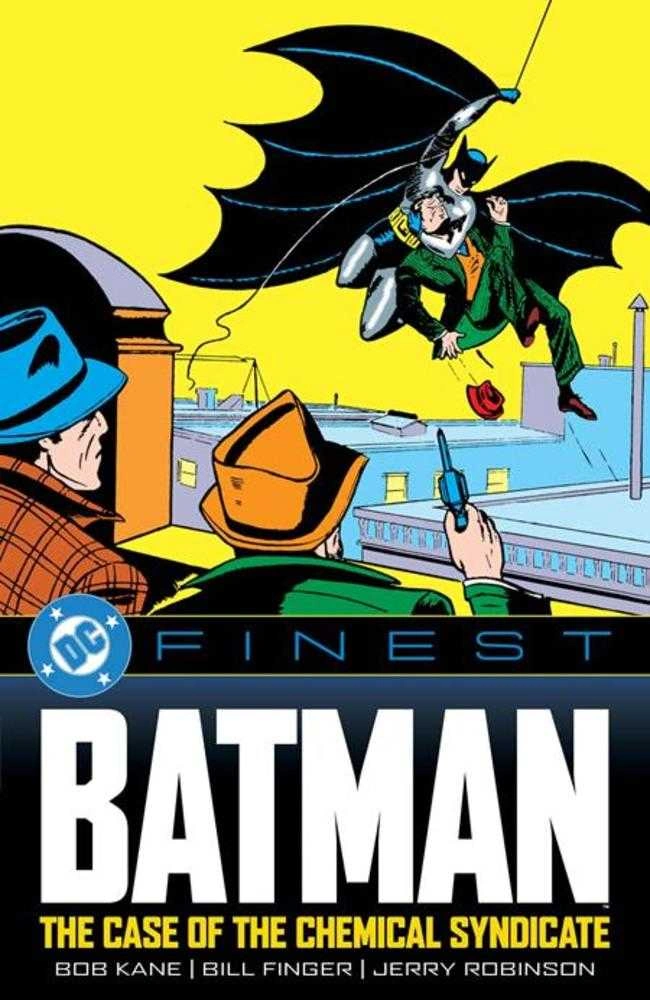
DC FINEST: BATMAN: THE CASE OF THE CHEMICAL SYNDICATE goes all the way back to the beginnings of Batman, reprinting DETECTIVE COMICS #27 to #51, NEW YORK WORLD’S FAIR COMICS #2, WORLD’S BEST COMICS #1, and BATMAN #1 to #5 from 1939 until the Spring of 1941. All of this material has been reprinted before; you could read good chunks of this as far back as the 1970s, and one suspects DC is keeping ahead of the public domain ticking clock here, but the material reprinted is undoubtedly of historical importance, and the price is right.
One thing that’s abundantly clear from this book is that Batman did not spring fully formed from the imaginations of Bill Finger and Bob Kane. And, especially in their first year of work, the work on the page is crude and rudimentary, both story and art. Both Bill Finger and Bob Kane are guilty of tracing stories and art from other sources. Bob Kane is, of course, well documented. Bill Finger has kind of been let skate on “borrowing” from The Shadow story “Partners in Peril.” Now, this was the state of the emerging form back in the early days of comic books; it was more about churning out content than artistic integrity. It was an industrial process first and foremost. And, heck, a paycheck in the midst of The Great Depression mattered. But you can see both the character of Batman become more developed and the craft of writing and art take big leaps forward within these pages. I think it will take until 1943 and the introduction of Alfred, The Batcave, the first Columbia movie serial, and the advent of the newspaper strip before the process of creating the Golden Age Batman will be fully completed, but large steps are taken within these pages.
One thing that’s immediately noticeable is how much the early adventures of Batman owe to the pulps. And especially The Shadow. The pulps were many things over the years, including westerns, horror (notably including H.P. Lovecraft and Robert E. Howard), adventure, weird fiction, science fiction, mysteries, and Batman covers most of that.
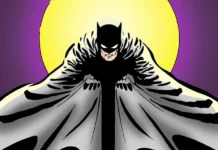
And most of that is covered with terrific atmosphere. It’s easy to ascribe everything good in these early stories to Bill Finger, but Bill Finger wrote the first two Batman stories; the 2nd isn’t very memorable either, and the next 7 stories, except the 2 page origin, were written by Gardner Fox. Yet, the art doesn’t skip a beat. It’s full of full moons, Batman lurking on rooftops, and swinging into action with his cape unfurling to become bat wings in flight. The villains also look like they’d be at home in Chester Gould’s Dick Tracy strip. Gardner Fox manages to invent a lot in his stories, introducing the Batarang and Bat-Gyro along with the first memorable villains, but Bob Kane, stiff art with a lot of swiping and all, is carrying the strip. At least until Bill Finger returns with the origin and a clearer direction, including the ideas of arch-villains introduced by Fox. Sadly, the text page from BATMAN #1 starts the myth that Bob Kane created Batman alone, although it does establish that it wasn’t some anonymous work-for-hire job. The article also doesn’t state that Bob Kane was any more than an artist and specifically states he was more comfortable behind a drawing board than a typewriter. You win some, and you lose some there. This is more a missed opportunity to acknowledge Bill Finger than Bob Kane hogging the glory.
That’s where the stories improve considerably. Jerry Robinson’s arrival on inks — which removed a lot of the stiffness from Bob Kane’s art — made the action much more dynamic. Robin arrives, and Batman finally has someone to talk to, reducing the amount of narration needed. Bill Finger starts introducing his cinematic influences, including German expressionism, Universal Horror, and swashbuckling action, and the feature finds its footing and blossoms. Batman also isn’t as intentionally murderous as the book finds its footing.
It’s also a product of its time. In ways fortunate and not. DC put a “racism” and “product of its time” warning in the table of contents for good reason.
There’s really no defense of the Chinatown stories in the book. Doctor Death’s Indian thug assistant isn’t much better. If that bothers you, feel free to skip. Honestly, you’re not missing much anyway.
I’m not going to get into the nitty-gritty of story-by-story reviews. Mostly, these are the crude beginnings of comic books, and while you see much more polished stuff by the end of the book, do not come in expecting modern comics or even polished Silver Age comics. But, some highlights:
- “The Case of the Chemical Syndicate” is a crude but memorable first outing.
- “Batman vs. Doctor Death” and “Batman vs. the Vampire” are two atmospheric stories that add to the building blocks of Batman. Say what you will about Bill Finger vs. Bob Kane, but Gardner Fox gets almost no credit, and he deserves some.
- The origin of Batman has stuck. It’s almost a cliché when it turns up in a movie now.
- Professor Hugo Strange makes his three Golden Age appearances here.
- Robin is introduced and would become the most important sidekick in comics in a hurry.
- The Joker is introduced, and the introduction of the supervillain and themed crimes would change comics profoundly. Reviews of the first six appearances of The Joker included in this volume can be found as part of a previous “A Joker’s Dozen” series at Batman-on-Film.
- Catwoman is introduced as a female foil and still largely defines the comic female villain to this day.
- Clayface (Basil Karlo) makes his Golden Age appearances, and Julie Madison is written out, perhaps accidentally creating the trope that Batman is sacrificing his personal happiness for a lonely crusade. Also, Bill Finger, Bob Kane, and Jerry Robinson get to indulge their love of old Hollywood and movies.
- BATMAN #5 features “The Case of the Honest Crook,” where Robin is almost beaten to death, and Batman goes on a vengeful rampage, defining how much his ward means to him as a result.
Honestly, that’s a fair amount of highlights for an admittedly crude volume. It was the beginning of comic books and superheroes, so that should inform your expectations. Still, by the end, you’ll see the Golden Age of comics shape up, and we’re well on the way to seeing the final shape of the Finger/Kane/Robinson Batman. That’s a good value for 600 pages priced at $40 MSRP. Although the apparent story behind the comics might be the more interesting part documented here. – Robert Reineke
GRADE: B (A+ for historical importance.)