How do you relaunch Batman after Frank Miller’s Dark Knight Returns? That seems like both an opportunity and a challenge. Especially when you remember that BATMAN and DETECTIVE COMICS had to go through the Comics Code Authority to be sold on newsstands. Sure, Alan Moore got away with it with an obvious horror book like SWAMP THING, but 80’s moms had heard of Batman and would have expectations of what should be in those books.
That was the challenge facing new editor Dennis O’Neil when he took over the editorial reins of the Batman corner of DC Comics in the post-crisis shakeup of the line. Among the questions Dennis O’Neil had to consider was how violent these books should be? How much should they be like The Dark Knight Returns, and how much should they contrast with it? How much of Batman’s history should be kept? How much should the books continue the ideas and threads from Doug Moench’s successful run?
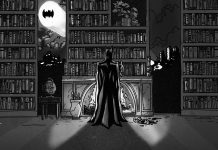
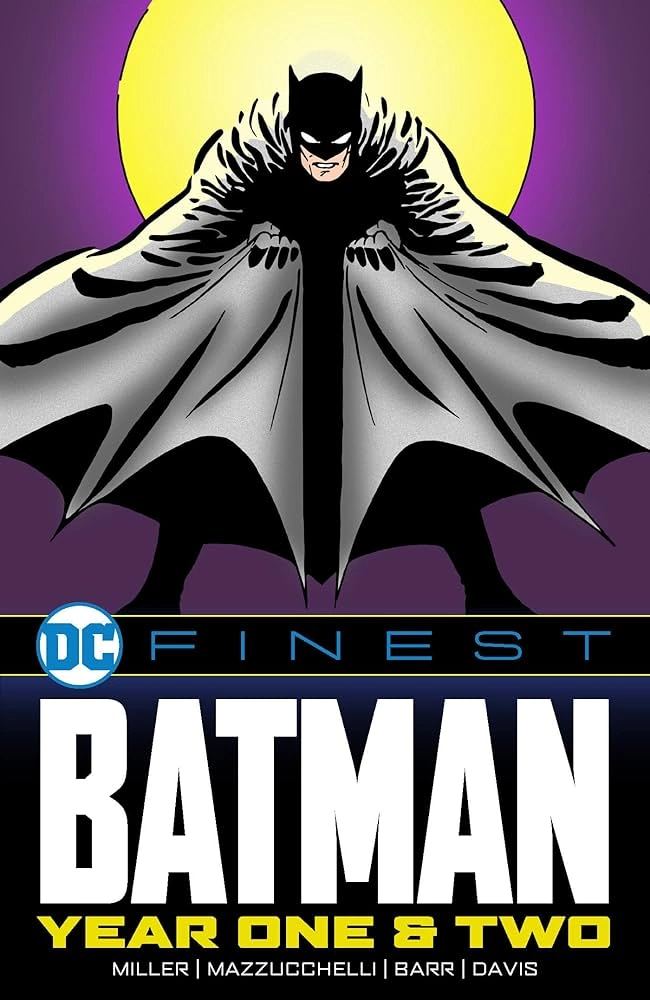
The answers that Dennis O’Neil arrived at are contained in DC Finest: Batman: Year One & Two, containing BATMAN #401 to #412, DETECTIVE COMICS #568 to #579, and BATMAN ANNUAL #11. There are 632 pages of comics reprinted here, and I’ll continue my refrain that this is a great value for your dollar. Still, there’s the caveat that if you’re interested in this volume, you probably also have YEAR ONE and maybe even YEAR TWO in your collection.
The contents of the collection are easy enough to group:
- BATMAN #401 and DETECTIVE COMICS #568 are tie-ins to the LEGENDS event and are just standalone Batman stories.
- DETECTIVE COMICS #569 to #579 are all written by Mike W. Barr. Issues #569 to #575 are illustrated by Alan Davis and Paul Neary. Issues #576 to #578 are illustrated by Todd MacFarlane. Issue #579 marks Norm Breyfogle becoming the regular artist on DETECTIVE COMICS.
- There’s a delightful two-page spread by Dick Sprang that’s a lovely bonus.
- BATMAN #402, #403, #408 to #412, and The Penguin story in Annual #11 are written by Max Allan Collins with a variety of pencillers and inkers.
- BATMAN #404 to #407 is YEAR ONE by Frank Miller and David Mazzuchelli.
- And, last but not least, Alan Moore, near the height of his fame, wraps up the Preston Payne Clayface III storyline started by Len Wein and Marshall Rogers nearly a decade prior.
With the contents out of the way, the question is how well Denny O’Neil succeeded in relaunching Batman post-TDKR? My answer is that you can see some growing pains here.
I think Max Allan Collins was not given the best chance to succeed. He had to do the most to restart the main continuity post DARK KNIGHT RETURNS and YEAR ONE. And Max Allan Collins clearly had to adjust on the fly to an artistic merry-go-round. By my count, there are 8 penciller/inker combinations in his run, and it’s just hard to develop any kind of narrative consistency. On paper, Max Allan Collins should have been a home run on Batman after his work on MS. TREE, DICK TRACY, his hard-boiled prose mysteries, and his future work on ROAD TO PERDITION, but those stories never develop any consistency. His prelude issues to YEAR ONE are violent and strong, but the change in artists is clearly taking a toll on developing any momentum. His legacy is changing Jason Todd from a clone of Dick Grayson to a street punk caught trying to boost the wheels on the Batmobile. That Max Allan Collins also manages to fit something of a sequel to “There’s No Hope in Crime Alley” in that new origin, along with a punny allusion to Oliver Twist’s Fagin, speaks to the ambition and the confused tone of that run. Maybe if the artist situation were more settled, Dennis O’Neil could have been more helpful as an editor. There’s a legacy felt to this day here, but the talent is seemingly adrift despite some high points.
I think Mike W. Barr’s run fares a lot better. Mike W. Barr had been writing Batman in a variety of tones in Annuals, THE BRAVE AND THE BOLD, and BATMAN AND THE OUTSIDERS, and he and Alan Davis were a familiar team. Barr cleans up some loose ends from Doug Moench’s run by having JThe oker electroshock Catwoman back into being a villain and then proceeds to preview what Grant Morrison would do two decades later, a run that ran through the various eras of Batman in a somewhat retro fashion going from light and campy, it really evokes the “New Look” era including recycling some deathtraps, to deadly serious. There’s perhaps the lack of a larger meta story to tie these disparate parts together, but you’re in good hands throughout Mike W. Barr’s run. Regardless of the run as a whole, “Fear for Sale” is a gem of an issue. For the record, I’m fine with YEAR TWO. It’s not in the class of YEAR ONE, and I’m aware of the fan objections, but it steers it back in the right direction by the end and features some fine art throughout.
There are two stories drawn by Norm Breyfogle in this collection: The Penguin story in the annual and Mike W. Barr’s updating of The Crime Doctor. He will be a stalwart as soon as the next volume.
People probably are not aware of Alan Moore’s Clayface story. They should be. It’s Alan Moore exploring a villain in depth while avoiding all the pitfalls of THE KILLING JOKE. If this one had been drawn by Brian Bolland, too, I think it would be rightly more famous. The story was edited by Len Wein instead of O’Neil, so it feels like it’s part of a previous era. That said, it’s a terrific story and makes the case that Preston Payne should not be the forgotten Clayface.
Finally, there’s YEAR ONE.
BATMAN: YEAR ONE is on the shortlist of greatest Batman stories. If you don’t already own it, that’s all the more reason to buy this volume.
Despite the inconsistencies, this is an important volume featuring work by some top-notch creators. Yes, there’s some post-Crisis growing pains evident, but there are gems besides the masterpiece that is YEAR ONE. Seeing them altogether also provides context and makes the case that while these stories are important, a switch was not suddenly flipped between eras. It was a process, a process where we’ll see big steps taken in the next few volumes. – Robert Reineke
GRADE: A-