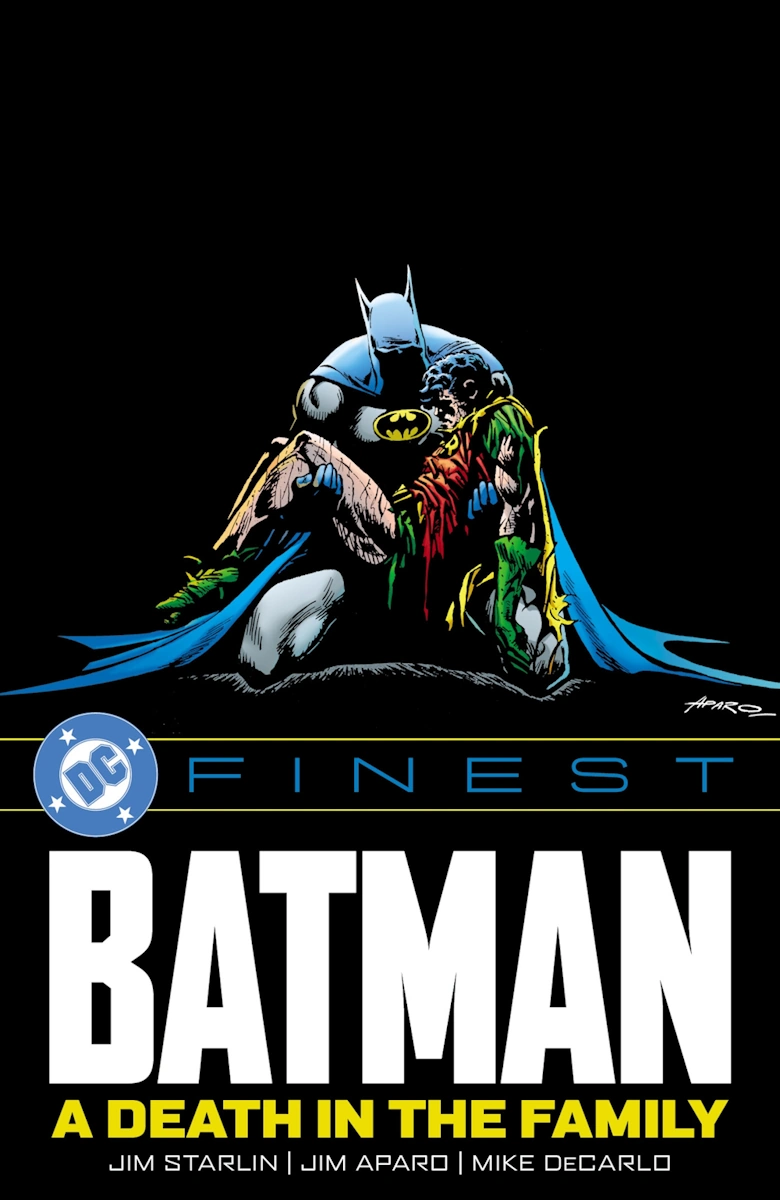
I have a confession to make. I was an accomplice in the death of Jason Todd. I dialed 1-900-720-2666, paid my 50 cents, and voted to off him. So, I played a role in the story that gives this volume its title, DC FINEST: BATMAN: A DEATH IN THE FAMILY, which reprints stories from August 1988 to December 1988.
And we’ll get to that story. The volume includes all of the following:
- BATMAN ANNUAL #12 featuring a murder mystery set in a modernist nightmare of a house, reminiscent of Universal’s THE BLACK CAT by Mike Baron and Ross Andru, with a Robin backup story.
- DETECTIVE COMICS ANNUAL #1, which is a follow-up to SON OF THE DEMON and a quasi-sequel to “Hail Emperor Penguin!” from BATMAN #257. It’s part of the three-part Fables annual event, also featuring Green Arrow and The Question and written by Dennis O’Neil and drawn by Klaus Janson and Tony DeZuniga. Only the Batman Annual is included.
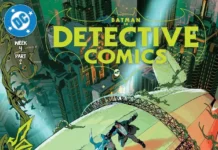
- DETECTIVE COMICS #590-595. All are written by Alan Grant and John Wagner. Issue #595, an INVASION crossover, is drawn by Irv Novick, and the rest are drawn by Norm Breyfogle.
- A Mr. Freeze-centric Bonus Book by Jeff O’Hare and Roderick Delgado, one of the last Mr. Freeze appearances before his “Heart of Ice” reinvention.
- BATMAN: THE CULT by Jim Starlin and Bernie Wrightson
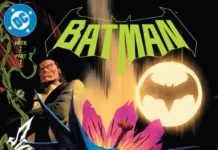
- And, BATMAN #423-429, which are all written by Jim Starlin and which feature pencils by Dave Cockrum, M.D. “Doc” Bright and Jim Aparo.
The volume totals a whopping 640 pages for $39.99 and is a relative bargain.
The heart of the book is the Norm Breyfogle-drawn stories and the Jim Starlin-written stories. And that takes up the vast majority of the book. So, let’s start elsewhere.
As I understand it, the Bonus Books were a way to try out new talent. In this case, I don’t think there was anything really there worth pursuing. The Mr. Freeze story is the definition of forgettable and the worst story in the book. It’s also only 14 pages of a large volume.
DETECTIVE COMICS #595, the crossover with Invasion, where Batman goes to Cuba to fight an advance guard of alien invaders. It’s serviceable but perhaps notable in that it features some of Irv Novick’s last work drawing the character of Batman. INVASION was a good event, but Batman is out of place here, and this isn’t a great showcase for Novick. I generally don’t mind events when they stick them in the annuals, but feel they’re out of place when you stick them in the regular run.
BATMAN ANNUAL #12 “Slade’s Demon” is a throwback kind of locked room mystery story featuring Batman. This would have been right at home in the early 1970s, perhaps drawn by Irv Novick. But Ross Andru’s art is a little lacking in atmosphere that would really make the story sing, and Mike Baron is a loose writer better suited for action tales like he was writing in NEXUS, BADGER, and THE FLASH than writing a tight mystery. Still, it’s a fun little tale. The Robin backup by Robert Greenberger and Norm Breyfogle reads like a prelude of Tim Drake over 38 years later.
I’ve always been a fan of the “Fables” three-part story, which tied together with annuals for Green Arrow and The Question. I think Dennis O’Neil was at the height of his writing skill with THE QUESTION this shows it. Plus, it has him dealing with the first appearance of his creation of Talia al Ghul post-SON OF THE DEMON. Plot-wise, it’s not great, especially as they haven’t really figured out what they were going to do with the Penguin yet, and wouldn’t until the early 1990s, but it is dealing with the emotional fallout of the Batman / Talia relationship and has the closest thing we’ll likely to get to a final resolution. Don’t sleep on this one.
We’re still in the first phase of Norm Breyfogle’s and Alan Grant’s tenure on Batman. Back when they had to earn the right to tackle the established villains. So what they did was introduce a new energy into Batman at the right time. It’s especially notable how Norm Breyfogle introduced a new way of drawing Batman. Neal Adams’ realism of the past was out, and replaced with a dynamism and use of shadows that almost seemed to be part of Batman himself. I have to believe it was a direct influence on Batman: The Animated Series, and it’s all on the page here. And if not able to rely on the usual devices, they took Batman to new places, London after terrorists, for instance, introduced new villains, the sympathetic Aborigine and the unsympathetic Cornelius Stirk, the Fear, new supporting characters such as Joe Potato, PI, and a new Batmobile Terrorism, the abuse of diplomatic immunity, and drugs, including those meant to be used for psychiatric purposes are all on the table as modern vices that Batman must combat. It’s a new, modern Batman that may not demand the volume title, but certainly has stood the test of time. These aren’t “important” stories in that they have big canon-defining events, but all of the
But this volume is the Jim Starlin show. Both in the BATMAN title and THE CULT. Jim Starlin takes up the majority of this volume as writer, and he’s clearly moving the bigger picture that would have ramifications for decades. Although I also think you can point back to the enormous influence that THE DARK KNIGHT RETURNS had on Starlin’s work. But Starlin, as a writer and artist, has always been interested in balancing big concepts with more realistic and personal thoughts. A superhero dies of cancer under his direction in THE DEATH OF CAPTAIN MARVEL, for instance. Starlin embraced the first-person narration of THE DARK KNIGHT RETURNS. He embraced the violence of that groundbreaking book. He had a rather conservative view of victims’ rights in his Batman work. He defined Batman, who would step in when the police weren’t capable or the system failed. And he would make Batman human and fallible.
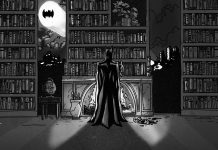
Case in point, THE CULT. Between THE CULT and A DEATH IN THE FAMILY, I think this is the closest that THE DARK KNIGHT RETURNS got to being part of continuity. With its black background colors bleeding to the edges of the page, you can spot it without opening this volume; it’s literally and figuratively one of the darkest Batman stories that had been told up to this point. Getting Bernie Wrightson as the artist, no doubt, is a large part of it. Wrightson has drawn Batman before, way back in SWAMP THING #7, and had spent most of the decade since out of the superhero space working on CREEPY and EERIE, creating Captain Sternn for HEAVY METAL, doing concept art for Hollywood, adapting CREEPSHOW, and doing illustrations for Stephen King. THE CULT was Wrightson announcing his return to DC in a big way. And THE CULT reflects the work of maybe our greatest comic book horror artist. Filtered, obviously, through THE DARK KNIGHT RETURNS. Jim Starlin also really puts Batman through the wringer in this dark tale. And Starlin breaks Batman as much as he’s ever been broken. It perhaps bears a little too much of the imprint of THE DARK KNIGHT RETURNS, but it’s mean, dark, horrifying, and Deacon Blackfire is a memorable one-shot villain. It was the kind of story that would not have been possible to publish before THE DARK KNIGHT RETURNS.
One more thing about Jim Starlin. He clearly did not like the concept of Robin. Frank Miller’s Carrie Kelley Robin helps Batman see a hopeful future and not just a violent, nihilistic, death spiral. Jim Starlin was not one to give Batman that ray of hope.
Before we even get to A DEATH IN THE FAMILY and the famous/infamous fan voting, it should be noted that Jim Starlin put his thumb on the scale, making Jason Todd as unlikable as possible in the lead-up to the big event.
A DEATH IN THE FAMILY brings back Jim Aparo for the much hyped event, one of the most prolific and best storytelling artists ever to grace Batman, in this event with continuity-altering stakes. The stakes are all there, and it surely made a splash that resonates to this day, but the question remains: Is A DEATH IN THE FAMILY a good story?
My answer to that question is mixed. The search for Jason Todd’s birth mother, the Joker proving to be an elusive thorn in Batman’s side, the Joker getting the upper hand on Jason Todd, and the aftermath are all good stuff that hold up. Jim Aparo draws one of the best scenes in Batman’s history, with Batman picking through the rubble of an explosion to find Jason’s body. There are undoubtedly artists who could have drawn that scene with more flash, but I can’t imagine it with more emotion and with body language that rings true throughout. It’s one of Jim Aparo’s finest hours of an illustrious career.
But the Joker becoming the Iranian ambassador to the United Nations?
That plot-turn has always been silly and credulity-straining. One does not have to be a fan of Iran to acknowledge that they’re always stopped short of giving the major powers of the world an excuse to declare war on them, as an attack on the United Nations would. And we’ve had almost 40 years of history to back that up. It’s barely more believable than some of the Red Scare villains comic book superheroes faced in the 1950s and 1960s. Luckily, the story’s emotions carry the event through, but it’s not without some serious caveats.
And, of course, the mechanism itself is something that DC has not done again, and for good reason. It’s a bad look for comic book fans to give a thumbs-up or thumbs-down to an audience-identification figure for kid readers. Yes, comics weren’t just for kids anymore, but they also shouldn’t just be for violent edgelords either. The fact that the timing of the poll and that there was a fee attached probably made it biased against younger newsstand readers, which kind of calls the whole bias of the poll into question. It was certainly weighted in favor of the ultimate result.
And, honestly, I think it was too big a decision to foist the responsibility on the readers. Reader polls are fine for things like selecting a new costume out of several alternatives or electing the next leader of the Legion of Super-Heroes. Those are low-stakes affairs that have no possibility of putting fandom in a bad light. But the death of Robin has stakes for people, and I always feel that if you want to do something like that, the creators and editorial should take ownership of it. Heck, in hindsight, I don’t think I would change the outcome. I know good stories related to the event are upcoming in the DC FINEST line, but I don’t know if I would repeat my vote with age.
Regardless of my feelings, on the vote or story itself, this is an important chapter for Batman. It’s not that often that canon-altering events happen. And regardless of some mixed feelings on the actual execution, this remains one of the essential events in Batman’s history, echoing until today. That makes it one of the essential Batman collections. – Robert Reineke
GRADE: A